




As someone who discovered the watch industry from the outside, the topic of “how to work in it” has never been far. Starting with myself.
Several times I wondered if I wanted to convert the night-and-weekend passion into a day job. Aside from this blog and the horological novel I wrote, I also did a few consulting stints on the topic and wrote a guide about watch-related activities in Switzerland. So why not go all the way?
The short answer is: I don’t quite know. It’s probably a mix of three things. First, I like my day job—there’s a reason I’ve been in the same company for 15 years! Second, I enjoy roaming as a free agent in the watch world, where so many doors have been kindly opened to me through this blog and other independent activities. I don’t want to lose that freedom by becoming associated with a specific brand. Third, while it’s a common dream—and an awful IG meme—to “job your love”, I find value in a passion that’s completely separate from professional drive and obligations. Thad said, those theoretical thoughts only hold until the perfect opportunity arises. In my case, it hasn’t yet, and maybe it never will.
Anyway, enough about me. The topic of conversion from Muggle to watch industry professional has often come my way because to many folks in my personal and professional circles, I’m the closest they have in their Rolodex to a watch industry insider. You’ve got to start somewhere!
While over the years quite a few acquaintances have asked me for tips and connections, which I happily provided, I can’t say I’ve seen a huge success rate. Turns out, it’s not because you’re smart, well educated and passionate about watches that you make a great candidate for a horolyman job (in case you didn’t get it, that’s just a horrible pun on salaryman).

WIS knowledge vs industry skills
As a passionate collector, you often end up knowing more about the brands you love than many of their own employees. But once you start looking at concrete job ladders and transferable skills, that doesn’t necessarily mean you know what the brand actually needs its employees to know .
Imagine for instance your expertise is in Sales, with experience in the automotive industry. You’ve been an Omega collector for over a decade and can name every single limited edition reference of the Speedmaster. Cars and watches are often thought of in common. Surely you must be the ideal candidate?

Network and experience
Well, it’s not that simple. To start, the nature of retail in the watch industry is actually quite different from the world of cars. Seasonality, supply, trends, regulation, negotiation methods, you name it: it’s just a different paradigm. It doesn’t mean you won’t be able to understand it, but if you’re competing with someone who’s been living and breathing it for ten years, what are your realistic chances?
More crucially, after a certain stage in your career, what you’re hired for is not so much your hard skills but rather your experience and, in the case of a sales job especially, your network. Knowing the specs of every Aqua Terra reference in-and-out will be of lesser value to Omega than you being best buddies with half the ADs in the Middle-East.

Cultural aptitude
My observation of the watch industry is that while it includes many different personality types, it’s highly codified. The more I think about it, the more I struggle to put words to it. It’s somewhat of a mix of culture not only about watches but also about how they’re actually made—two very different things—combined with the ability to keep a cool head despite everything discussed or displayed being based on emotion.
In fact, this je ne sais quoi is likely the main single point of failure I’ve witnessed when highly competent individuals with sufficient transferable skills to offset their lack of industry experience ended up not being able to make it into their dream watch job: they just weren’t a good cultural fit.

Jérémy
Now, let me tell you why I actually thought of writing this article. It all started about a decade ago. My family and I lived in Paris and had just moved to the other side of the city. There were two weeks of school left before the kids were transfered to our new neighborhood, and with our third child just a couple months old, getting the older brothers to class in the morning while making it on time at the office was a headache. To make things easier, we decided to do it by Uber.
On the second or third day, the driver who picked us up was particularly nice. The kids loved him. He was also a great driver. So I asked if he could come by the next day. During the rides, we started talking, often about business. He would ask me about my job in “big tech” and respectfully challenge me, sometimes shifting my perspectives on key topics, to my great surprise. By the end of the week, I did something I never expected: trust a (almost) stranger to drive my 6 and 10 years old kids to school alone.
Jérémy His had taken on the Uber gig to fund his business school studies, which he was just wrapping up at the time. After that, he ended up working at Deloitte as a Technology consultant, did an MBA, created a startup in Columbia—where his wife is from—and then joined a consulting firm again to work on data transformation projects, including for a prominent NBA franchise.
Jérémy isn’t a watch collector, but he always had a soft spot for mechanical timepieces; I remember asking him about the Tissot Le Locle he was wearing in his Uber, a gift from his Mother. More importantly perhaps, he naturally oozes that je ne sais quoi I was trying to describe earlier about folks in the watch industry.
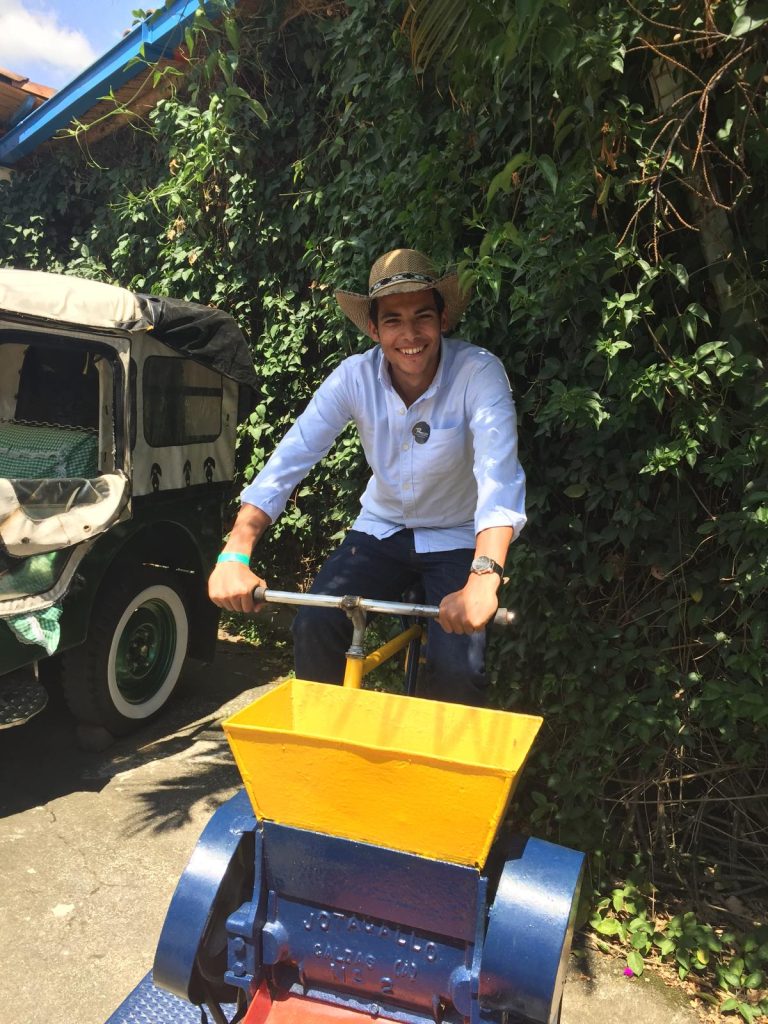
That’s why, two years ago, when Jérémy and his wife decided to move back to Europe, I couldn’t resist pitching them on Switzerland. The stars seemed aligned, with Jérémy being an obvious fit for a role at Audemars Piguet, to work on Business Data within their IT department. Unsurprisingly, he successfully passed the interviews and moved with Karol and their adorable dog Dalí from Medellín to the Vallée-de-Joux—as you do.
Jérémy had a brilliant time at the Holy Trinity maison, but the adventure is coming to an end following an internal restructuring. Given his experience and network in consulting, data and more recently AI, his first reflex is to start looking among his connections in Zurich, Lausanne and Geneva for a gig in those spheres. Personally, I’m trying to convince him to stay in the watch world. He agrees with me that he’s a natural fit, but simply lacks the connections. So here we are.
According to a survey I did a couple years ago, half of you reading this blog are watch industry professionals. If you’re looking for someone who not only has data transformation business skills but is more generally a highly trustworthy intrapreneurial strategic thinker and doer, I’m pretty sure you’ll want Jérémy on your side. Especially in tricky times like these, a team member who thinks outside the box, challenges status quo and yet acts collectively in the best interest of the company is a rare asset. If you’d like to be put in touch, please message me through the contact form or on Instagram.



Thank you Alex !